Big Data Supply runs data center decommissioning in Los Angeles from the first inventory list to the last certificate of destruction. We take the servers, storage arrays, tape libraries, drives, switches, and the rest of the rack out of your facility in an orderly way, sanitize or destroy the data on every device, and get the reusable gear ready for resale so you recover money instead of paying to throw it out. We are based in Santa Ana, a short drive down the freeway from most of the Los Angeles market. Whether the pickup is in Los Angeles County or Orange County, downtown Los Angeles, El Segundo, Playa Vista, Long Beach, Anaheim, or as far out as Riverside and the Inland Empire, it is a local job for us rather than a long haul.


Questions? Contact us via Live Chat,
support@BigDataSupplyInc.com or
Toll Free (800) 905-7329.
Currently buying & supplying IT in over
100 countries and counting!
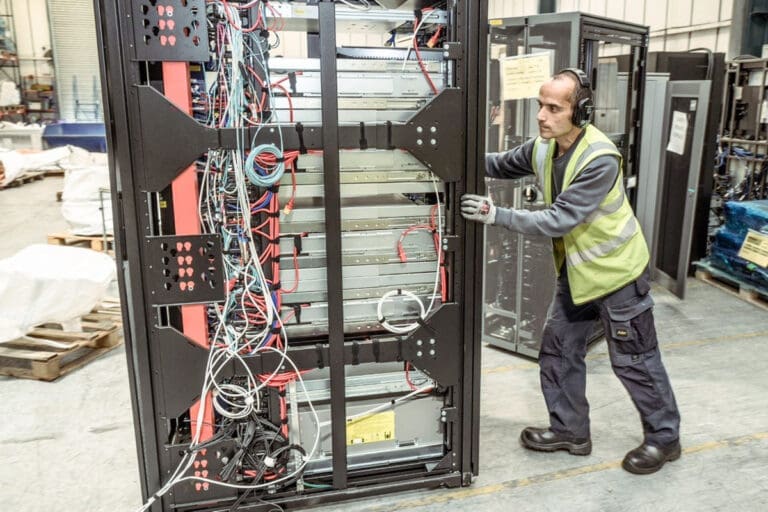



At Big Data Supply, decommissioning a data center means taking the IT infrastructure out of a live facility in a structured, secure, documented way. That covers the servers, the storage, the networking gear, the racks themselves, and everything that supports them. Most of the projects we see in the Los Angeles area come down to one of two situations, and they are worth telling apart because the work is different.
The most common reason companies here call us is a refresh. The hardware has aged out, newer and more efficient systems are going in, and the old gear has to come out cleanly to make room. Even when this is a routine cycle that the IT team has done before, it still takes coordination, careful handling of assets that may still hold data, and a plan for where everything goes. That is the part organizations tend to hand off, because doing it in-house pulls staff away from the migration they actually care about.
The other situation is a full closure, and there are a fair number of these around Los Angeles right now as companies move workloads to colocation or to the cloud and give up their own rooms. A shutdown is a bigger job than disconnecting hardware. It usually pulls in large volumes of equipment, structured cabling, power gear, and supporting systems, and it comes with compliance requirements, secure data destruction, and a real logistics plan. In California there are also state and local rules to follow on top of the federal ones, so the disposal and recycling side has to be handled by someone who knows them. That combination is the reason companies bring us in rather than trying to run a shutdown as a side project.
People use the two terms almost interchangeably, but they are not quite the same. Decommissioning data center is the physical side of the job: the planned removal of hardware from the facility, the inventory, the disconnection, and the haul-out. IT asset disposition, or ITAD, is the broader program that decides what happens to each asset after it leaves, meaning the data destruction, the resale and value recovery, and the certified recycling of whatever is left. Big Data Supply does both as one service, so the same company that pulls the rack also wipes or destroys the drives, remarkets the resalable gear, and recycles the rest, and you get one set of documents that covers all of it.
A decommissioning that goes well starts with a process that is secure and written down. Taking equipment out of service is not only about unplugging it and clearing the floor. If the work is sloppy, the information sitting on servers, hard drives, and other storage devices can walk out the door, and for a California business that can turn into a reportable incident under state privacy law. Companies that handle financial, healthcare, education, or government data carry even more exposure. Because of that, we run a structured process that protects the data, keeps a clear record of accountability, and supports whatever compliance obligations you are working under. The four pieces below are the ones that matter most.
Before a single device is wiped, destroyed, or hauled off, the data that the business still needs has to be preserved. We tell clients to make secure backups of anything necessary first, because once a drive is through certified erasure or a shredder there is no getting it back. In some cases those backups also serve a legal or audit purpose later, since they document what was on the equipment at the time it was retired.
A solid audit trail is one of the parts that separates a professional job from a guy with a truck. We keep a central record of every asset that gets decommissioned, including the equipment details, how it was handled, the service dates, and where it ended up. That record lets you follow each item from the moment it leaves your floor through destruction, recycling, or resale. It is also why every project we run comes with an asset manifest, and for anything with data on it, a certificate of destruction and a chain-of-custody record.
Access control is easy to forget once the hardware is out the door, and it is a real gap. Before the equipment is retired, the accounts, permissions, and authentication tied to those systems should be reviewed. We support a workflow that clears out old user IDs, revokes credentials that nobody needs anymore, and lowers the chance that a retired system or a stale login becomes a way back into the network after the gear is offline.
Compliance drives a lot of these projects. Depending on your industry the relevant standards might be NIST, PCI DSS, HIPAA, FERPA, or FISMA, and for California companies the CCPA and CPRA sit underneath all of it. Many of these programs expect detailed asset tracking across the full life of the equipment, from purchase and use through destruction and final disposition. A data center decommissioning in Los Angeles that is run properly gives you that tracking, which lowers your risk and makes the whole thing much easier to defend if anyone ever asks.
People ask us all the time what proof they get at the end, so here it is plainly. For every Los Angeles project that involves data-bearing devices, we produce a set of records that are built to survive an audit. That is an itemized asset manifest with each asset and its serial number, a certificate of destruction for every drive or storage device we erase or physically destroy, and a chain-of-custody record that traces how the equipment moved from your site through transport, processing, and final disposition. The certificate states the method used for each class of asset, whether that was NIST 800-88 aligned logical erasure or physical shredding. If your compliance or legal team wants to see the format before you commit, we can send redacted samples of all three so there are no surprises.
There is no flat price, and anyone who quotes one sight unseen is guessing. The cost of a data center decommissioning in the Southern California market—spanning Los Angeles, Orange, Riverside, San Bernardino, and Ventura counties, including major cities like Los Angeles, Long Beach, Anaheim, Santa Ana, and Riverside—moves with a handful of things: how many racks and assets are coming out, how many data-bearing drives need to be erased or destroyed and by which method, whether the job needs on-site labor and freight or you can stage it for pickup, the disposal fees for material that has no resale value, and the documentation and insurance the project calls for. A downtown high-rise with a reserved freight elevator and a security escort costs more to work in than a ground-floor suite with a dock, so location matters too.
The part that surprises people is that the equipment usually has value working against that cost. On many jobs the buyback on the resalable servers, storage, and networking gear offsets part or all of the removal cost, and on jobs with newer or in-demand hardware the recovered value can come out ahead of the cost of the work. That is the whole reason we assess the gear asset by asset instead of treating it as scrap. We quote for free, usually within one to two business days of getting your equipment list, and the quote lays out the removal cost and the expected buyback side by side so you can see the net.
It depends mostly on the size of the job and the building. A small refresh of a few racks, staged for pickup, can be done within a few days of an approved plan. A full site shutdown, with power and cooling to remove, freight to coordinate, and a colo's scheduled elevator windows to work around, usually runs a few weeks from the go-ahead to the final documentation. When we send the quote we also send a dated schedule, so you are not guessing about when the room is clear and when the certificates land.
Because the thing that usually slows a decommissioning down is not knowing what happens next, here is the sequence and the timing you can plan around. The exact numbers move with the size of the job and where the site is, so treat these as typical ranges and we will put the real dates for your project in writing.
A decommissioning plan is the roadmap for taking retired infrastructure out safely and in an organized way. Data centers run under constant pressure on space, power, and cooling, so having a plan for how equipment leaves is part of running the facility well, not an afterthought. A good plan lets you make a real decision about every asset instead of treating it all the same. With one in place, we help LA-area organizations recover value, clear the floor space they are paying for, and make sure the equipment is handled securely and within the state's environmental rules.
Why the plan is worth the effort
A strong plan gets you more back from the retired equipment and lowers the risk while everything is in motion. We focus on three things for clients.
Not everything should be handled the same way. Some assets are worth reselling, some can be reused somewhere else in your organization, and some need to go straight into certified recycling. We look at the equipment and recommend the sensible next step based on its condition, age, what it is worth on the market, and any compliance strings attached. As a rough rule, newer and well-kept gear is worth remarketing, mixed lots and enterprise storage are usually best run through a buyback so you get value and documented destruction in one shot, and anything with drives in it should go through the secure disposition path rather than a consumer marketplace like eBay or an auction. We will map this out against your actual inventory instead of leaving you to guess.
One of the main points of a decommissioning is getting old or replaced equipment out efficiently so the new systems can go in without a delay. In the LA market, where colocation space and downtown square footage are not cheap, an empty cabinet you are still paying for is money going nowhere. A detailed plan makes sure the old hardware comes out cleanly and the space is ready for whatever is next.
A real Los Angeles data center decommissioning company has to do more than pull hardware. We put the weight on secure handling, responsible recycling, and processing that keeps material out of a landfill, so you can meet your own internal standards and the sustainability commitments that a lot of California companies have made public.
How we build the plan
Before anything is removed, we put together a plan built around your infrastructure, your timeline, your compliance needs, and the profile of the assets themselves. A workable plan covers the removal, the transport, the resale opportunities, the recycling, and the final disposition. Without one, a decommissioning tends to get disorganized, slow, and risky in a hurry. A plan made for your site gives you a smoother transition, cleaner asset tracking, and a project that actually finishes on time.
Where the retired assets end up
A big part of the plan is deciding the best outcome for each retired asset. We assess the equipment to sort out what still has resale value, what can be reused internally, and what belongs in a certified recycling stream. On many jobs the newer, well-kept equipment gets repurposed or sold to recover value, while the older hardware, the low-value parts, and the expendable material like cabling and ducting go to responsible recycling. Working through it asset by asset is how you recover as much as is reasonable while keeping the whole thing secure and compliant with California's handling rules.
We run decommissioning through a set of clear phases that are meant to protect the data, keep the project compliant, and keep it organized from the first day to the last. Every site is a little different, but most projects follow one of two paths depending on whether you are refreshing equipment or closing the whole facility.
Phases for an equipment refresh
When newer systems are replacing older ones, we work through a controlled sequence that keeps the downtime low.
Phases for a full facility shutdown
When a whole site is closing, the scope gets wider and more involved. We plan for the infrastructure, the compliance, and the asset removal all at once.
If you are comparing vendors, here is a short checklist that separates a real data center decommissioning partner in Southern California - whether you are operating in Los Angeles County, Orange County, or major tech hubs like Long Beach, Anaheim, and Riverside - from a hauler with a truck. Look for a recognized certification such as R2v3, RIOS, e-Stewards, or NAID AAA, because that is what keeps you compliant with California's handling rules. Confirm the company can actually come to your site rather than only accepting drop-offs, since freight in LA is expensive and slow. Ask exactly how they destroy data and what proof you get, and make sure the answer includes a certificate of destruction with serial numbers, a chain-of-custody record, and an asset manifest. Ask whether they buy back or remarket the resalable gear, because that offset is real money. Check that they carry insurance during transport. And look for an independent track record you can verify, such as a Better Business Bureau profile or a public marketplace history, rather than only testimonials on their own site. Big Data Supply is built to clear every item on that list, which is a fair part of why LA-area companies call us.
The useful life of a data center is usually a lot shorter than the life of the building it sits in. In a lot of cases a facility is built to run well for something like 15 to 20 years, even though parts of the structure can stay usable far longer than that. The steel frame, the shell, and the exterior panels can go for decades, sometimes 50 to 60 years or more. The building is rarely the limiting factor, though. The systems inside it, meaning the servers, the storage, the networking, and the electrical and mechanical equipment that keeps them running, age much faster than the walls around them.
Most of the IT gear inside a room gets refreshed on a much shorter cycle, often every three to four years, to keep up with the performance and efficiency that the business needs. Over time the aging power systems, the cooling, and the older hardware make it more expensive and less practical to keep the room running. When a facility in the Los Angeles area gets to that point, companies call Big Data Supply to manage the transition, whether that means retiring the outdated equipment, clearing space for a modernization, or closing the room for good. Because we are local and we are R2v3 and RIOS certified, we can handle the removal, the data security, the asset recovery, the recycling, and the final disposition in a way that keeps you on the right side of California's rules and gets you as much value back as the equipment will reasonably return.